
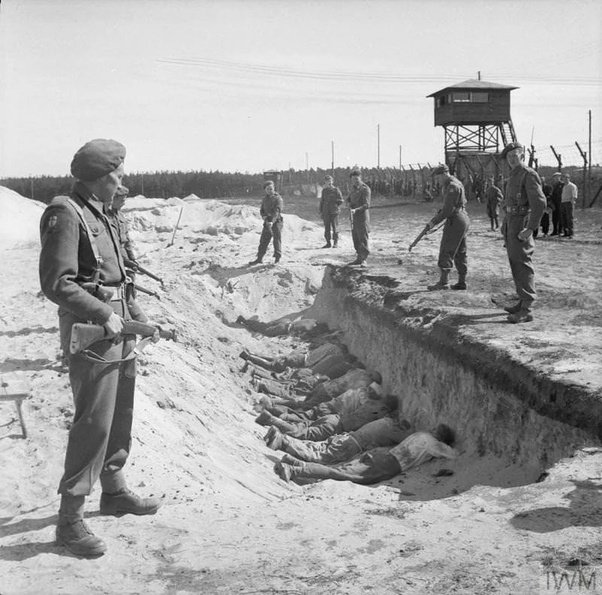
I attempt, but it is hardly possible to visualize the horror of Bergen -Belsen. Belsen was a center of unbelievable suffering, in contrast to other camps that were built to carry out the masses within a short period of time. The Nazis did not need to kill people even though they starved and died of cruel illnesses.
Around 1941-1945, some 50,000 people were killed there. The majority of the victims were Jews, but Soviet prisoners and political opponents were not left behind since they also died.
What British soldiers saw when they arrived in April 1945 was the greatest heartbreak of every soldier. When the survivors gathered, the bodies of more than 10,000 and approximately 60,000 survivors were uncovered on the ground, thin, skeletal, and hit with typhus and other infections.
The former German SS guards were compelled by the British to carry out the burial work which made them to face the atrocities that they had contributed to.
The agony did not stop even after liberation. The survivors were too fatigued to recuperate; another 13000 people succumbed during the weeks that ensued. This camp had just before the end of the war killed its famous diary writer Anne Frank who succumbed to typhus.
Bergen-Belsen is a reminder, that cannot be ignored, of how cruel and indifferent to human life the Nazis could become, that silence speaks louder than words.