
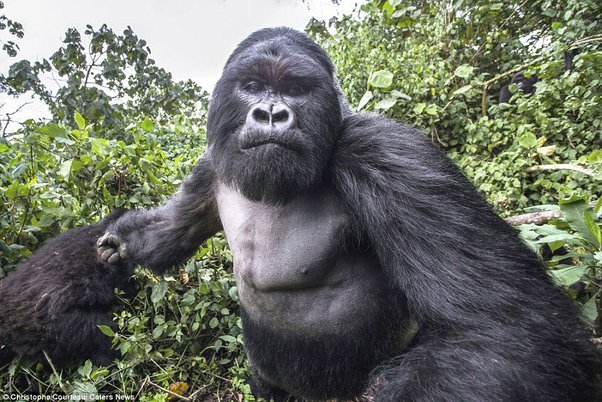
Due to their humongous size (at around 150–160 kg) and intimidating strength, gorillas have no natural predators to fear from. Occasionally, young gorillas, weak or sick adults find themselves vulnerable to leopard attacks – in fact, the leopard is the only large apex predator of the African rainforests (the gorilla’s natural range), where lions are absent –; but even then, a hunting leopard must be wary, since gorillas do live in groups and are very protective of their kind.

Yes: even for a strong leopard, a gorilla (especially a silverback male) is much too large and much too risky to take on, particularly with its bulk, nasty bite-force – between 1,000–1,400 pounds per square inch (PSI), in contrast with the leopard’s bite-force that is only 470 PSI –, and long arms so powerful that only one blow is enough to break the leopard’s spine. As such, like I said previously, gorillas have no natural predators, apart from man.
Due to habitat destruction via deforestation, as well as diseases contacted from humans, civil unrest and rampant poaching for their meat, gorillas are listed as critically endangered species – because of human activities, lowland gorilla populations are around 4,000–6,000 individuals in the wild, while mountain gorillas number less than 880 individuals!
Thankfully, no hope is lost: thanks to heavy conservation efforts, wild gorilla populations have reached an upward trend these past few years, at a point they’re no longer on the endangered species list. But there’s still a great deal more to do in order to ensure these magnificent apes a better future; and that’s why it’s more imperative than ever to encourage conservationists in their war to save the world’s last remaining gorillas.