
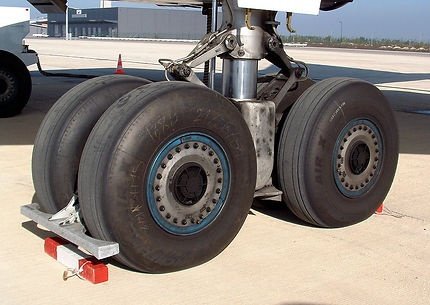
For 27 years, the Concorde had a brutal fight with its tires-its enemy being the heat-brutal, merciless heat capable of tearing rubber off-like paper.
At takeoff-the tires of the Concorde rotated 250 times in a second. Due to friction, this heated them to 400 degrees Fahrenheit.
They hit the ground at 170 miles an hour with 188,000 pounds of airplane behind them. It sounded like a sledgehammer hitting an anvil.
Each tire underwent some 25 landings. They needed special-compounds because of the tremendous heat and pressure. An average-aircraft tire would have been torn apart like tissue paper.
The tires on the Concorde had reinforcing layers of strong nylon that held them together against extreme forces.
Special tires can-fail though-The Air France crash of 2000 was initiated by a tire burst.
A small strip of metal on the runway cut a tire. The rubber exploded like a bomb-Pieces hit the fuel tank-Fire followed. Death came after.
The engineers knew the risks. Following each incident, they make tires stronger, add pressure sensors, improve the rubber compounds.
At supersonic speeds, physics allows no leeway. The tires remained the Concorde’s Achilles heel until its final flight.
British Airways had their own problems. Their tires failed nineteen times between 1976 and 1979.
Each failure was a harbinger of warning. Some did provoke emergency landings; none crashed until that fateful Parisian day.