
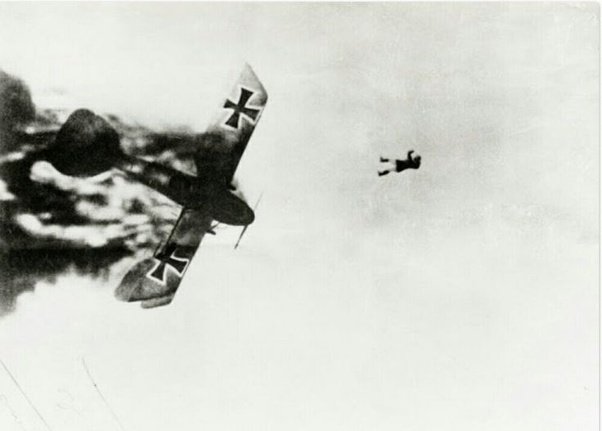
I’ve read a lot about the brave pilots of World War 2, and let me tell you, bailing out was not one thing like the movies. Most people don’t know that back then you didn’t have a button that you could press to eject. If your plane was hit, you had to unbuckle your seatbelt, plow back the heavy glass roof and physically climb out, in a falling plane.
It was a terrifying struggle. Your life depended on how fast the plane was travelling. If you were going slow, say under 170 mph, you had a good chance maybe, 75%. But if the plane was diving fast, at 300Mph or more, the wind became like solid stone wall. And it would be pinning down a pilot inside the seat so he couldn’t even move a muscle. They were trapped.
Even if you did get out you had to pray you didn’t hit the tail of your own plane. One out of every four who jumped as pilots died because the wind ran them into the back of the plane. It was like hitting a closed metal pole at full speed.
There is a well-known story of a British man, Nicholas Alkemade. His plane was on fire and his parachute was destroyed. He preferred to jump from an altitude of 18,000 feet instead of burn. He collapsed over three miles, crashing into some pine trees and soft snow and lived. He was lucky, though.
To the end of the war the Germans experimented with use of ejection seats for their fast jets. But these were not safe like these days. They used compressed air to blast the pilot out. The force of it was often violent so that it snapped the back of the pilot.
Appreciate an upvote if you find it helpful and informative.
Thanks for reading!