
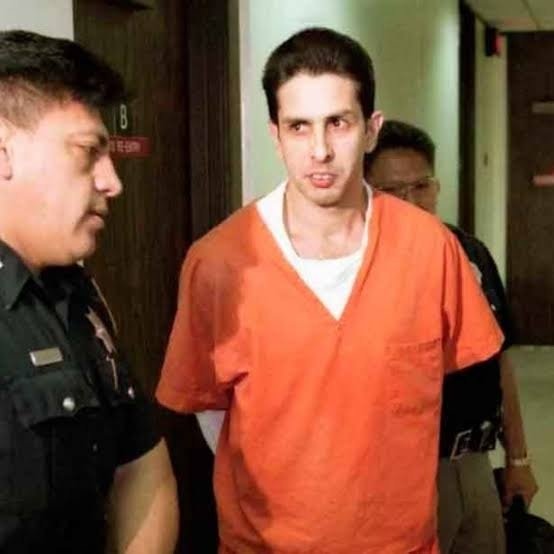
At the wheel was the then twenty-year-old Ricardo Adalpe Guerra, while Roberto Carrasco Flores was sitting on the passenger side.
The police officer who stopped the car, James Harris, ordered the two to get out of the vehicle and put their hands on the hood. While Ricardo was following orders, Roberto pulled out a gun and shot the police officer four times, killing him.
At this point, both boys ran away from the crime scene and, during their escape, Roberto shot in the direction of a passing car, killing the driver.
At this point the police closed the neighborhood where the shooting had taken place, in search of the two boys. Roberto was found a couple of hours later, while he was hiding in a garage, from which he fired again at another police officer, missing the target but being killed during the shootout.
Ricardo was found shortly afterwards while hiding under a caravan, arrested and taken to the crime scene, where the police were questioning witnesses.
The investigations were conducted in a completely incorrect manner: looking for the two men house by house, the police forced the residents face down outside the homes, pointing a gun at their heads.
Some were taken to the station until the following morning, some of them barefoot or not fully dressed (they were however normal citizens who were in their homes at that moment).
Several people witnessed the shooting, identifying Roberto Carrasco Flores as the sole perpetrator of the two murders.
The police officers, despite everything, made false statements, placing the blame on Ricardo.
The witnesses, many of whom were Hispanic and unable to speak or understand English, were threatened with legal repercussions if they did not sign the report compiled by the officers.
In many cases, families were threatened with having their children taken away by social workers.
After these threats the police dragged Ricardo, handcuffed, in front of these people, demanding that they identify him as the culprit.
Many of them, out of fear, complied with the wishes of the police, while no testimony was taken from those who continued to maintain the young man’s innocence.
Ricardo Adalpe Guerra was arrested on charges of murder and sentenced to the death penalty.
Thanks to some lawyers convinced of his innocence and the testimonies of those who, despite the threats, continued to underline his non-involvement in the facts, the death penalty was suspended and, on May 18, 1995, Judge Kenneth Hoy attacked the department of Houston police, guilty of tampering with evidence and acting completely improperly, declaring that Ricardo had been denied a fair trial, ordering him to be retried or released.
Therefore, following a new trial, with all the evidence correctly exposed and all the witnesses re-examined, the state of Texas dropped all the charges, recognizing Ricardo as innocent and releasing him on April 16, 1997, after fifteen years of unjust imprisonment.
After returning to Mexico, to his hometown of Monterrey, Ricardo died in a car accident on August 22, 1997, just four months after his release from prison.