
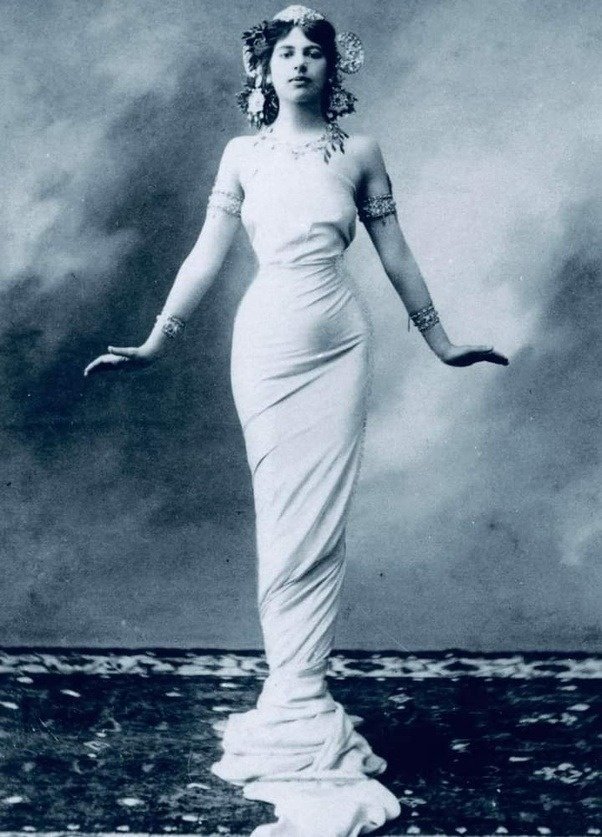
In the cold hours of the early morning of October 15, 1917, a guard entered a prison cell in Paris and gently shook a woman awake.
Her moment had arrived.
She rose calmly, dressed herself with care—black stockings, high heels, and a fur-lined velvet cape—as if preparing for a performance rather than her death. With quiet dignity she said, “I’m ready.”
She was Mata Hari, the most famous—and most controversial—woman of her time.
From Margaretha to Mata Hari
Mata Hari was born Margaretha Geertruida Zelle in 1876 in the Netherlands. Her early life was marked by loss and disappointment: her family collapsed financially, her parents separated, and she endured an unhappy and abusive marriage to a Dutch army officer in the East Indies (modern-day Indonesia).
After escaping that marriage and losing custody of her child, Margaretha reinvented herself in Paris. She created a new identity—Mata Hari, meaning “Eye of the Day” (the sun) in Malay.
She became a sensation.
A Star of Paris
In the early 1900s, Mata Hari dazzled Europe as an exotic dancer. Her performances blended Eastern-inspired costumes, slow movements, and mystery. To Parisian audiences, she seemed both dangerous and irresistible.
She mingled with generals, diplomats, politicians, and wealthy lovers across Europe. Her beauty, confidence, and independence were unusual—and unsettling—in a world dominated by men.
Then came World War I.
War, Suspicion, and Espionage
During the war, Mata Hari continued traveling across borders—something few civilians could do. Because she was Dutch (and the Netherlands was neutral), she moved more freely than most.
This freedom made her valuable… and suspicious.
French intelligence accused her of being a German spy, claiming she passed secrets to the enemy. The Germans, meanwhile, later hinted she had been expendable—a pawn rather than a true agent.
There was little solid evidence. Many historians believe Mata Hari was more a courtesan and performer than a spy, and that French authorities needed a dramatic scapegoat to blame for military failures.
Trial and Betrayal
In 1917, Mata Hari was arrested and tried in a closed military court.
She was denied a fair defense, portrayed as immoral, manipulative, and dangerous.
Her lawyer fought for her life, but the verdict was already decided.
She was sentenced to death.
The Final Morning
Before dawn, guards led her to a field on the outskirts of Paris.
Twelve French soldiers stood ready with rifles.
They offered her a white blindfold. She refused.
“Should I wear that rag?” she asked.
She stood straight, looking directly at the firing squad. Behind her, a priest, nuns, and her lawyer stepped away.
The command was given.
The rifles fired.
At 41 years old, Mata Hari was dead.