
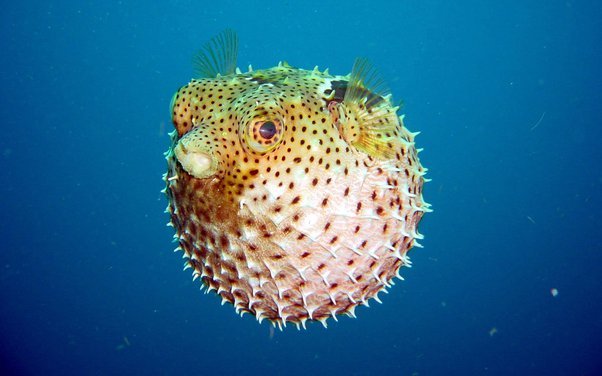
You know, I had a pufferfish once. Puff Daddy. He was the best, always dancing at the front of the tank for me and spitting water out over the top when he wanted another clam snack. Unfortunate for him, Mr. Crabs shared his home, one of the biggest, meanest hermit crabs you’ve ever seen. He was a beast, dominating the tank from his badass spikey shell. He was also a huge pain, eating up all my expensive fish companions, but I kind of respected his strong command in a way. Mr. Crabs wasn’t very nice to Puff Daddy, and from watching their many battles I can tell you that pufferfish can definitely live beyond two “puffs”. (Mr. Crabs got what was coming to him, though. He was taken out in a pretty spectacular way – mutiny, taken down by his smaller crab cohort during one of his many molts.
The “two inflations” rule sounds like skewed information based on data from research done at James Cook University in Australia. They were checking to see if puffers hold their breath while they inflate in order to force ingested water to stay in their stomachs. It turned out not to be the case; pufferfish continue to breathe while puffed.
What they did find, however, is the fish’s oxygen uptake increased five-fold, and it took over five hours to return to regular metabolic levels. That’s pretty exhausting for those little guys, so after inflating 3 to 8 times in a row during the experiment, they’d stopped puffing up. Of course, that’s in the state of extreme exhaustion. Pufferfish in their natural settings aren’t continually poked and squeezed, and can inflate many times throughout their lives as needed… especially when it comes to defending themselves against crotchety crabs.
This is not-so-puffed Puff Daddy during one of his many trips to the quarantine tank for ich treatment:
