
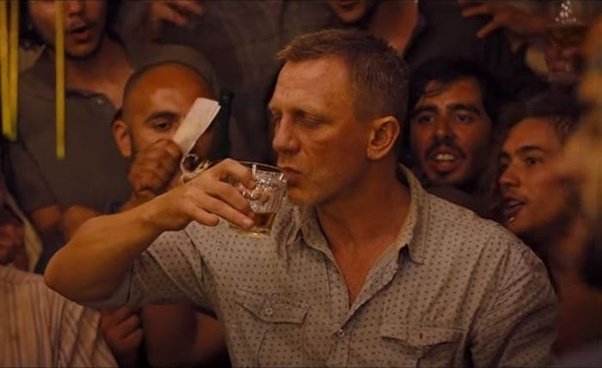
In the first movies, James Bond is a suave, smooth gentleman. There is steel underneath his skin, a hard core underneath a silken exterior. But above all, he’s a gentleman. He drinks, he gets ladies, he’s a bit of a cheeky fellow and he takes lives as easily as a model slides in and out of her outfit during a fashion show. But he makes it look… easy. Effortless.
Then there’s the James Bond of Daniel Craig’s movies. And his take on Bond is… different. To his Bond, the job longer seems as easy as it once did. This Bond is a broken Bond, a damaged man, he’s not just drinking a cool cocktail every now and then, no, this is man who takes shot after shot to forget a dark and troubled past. He’s a relic of a bygone era, and he’s painfully aware of it. He drinks to keep the ghosts of his past at bay. Possesses none of the charm of a Brosnan, Moore, Connery or even Dalton.
Cold eyes. Cold drinks on ice. And he isn’t making any of it look glamorous, anymore. His mouth smiles, but Craig’s eyes are as cold as those drinks he sips, as cold as the beers he drinks too much of, the cocktails he throws back like a kid would wolf down on a pitcher of lemonade on a hot summer’s day. Drinking isn’t cool anymore, neither is smoking. It’s addiction, and it hides all sorts of pain, drowns out all sorts of demons. And as far as movie franchises about spies go, it’s done well. Even beautifully.
Some people — painfully unimaginative people — insist James Bond will only truly be modern if he’s played by a “person of color” or if he’s gay or a woman or somewhere on the rainbow spectrum. They forget that the character has already changed a lot over the years. Daniel Craig’s Bond was, decidedly, an old-fashioned government employed gun-for-hire, lost in an increasingly more modernized and complex world, and coping with it through severe alcoholism.