
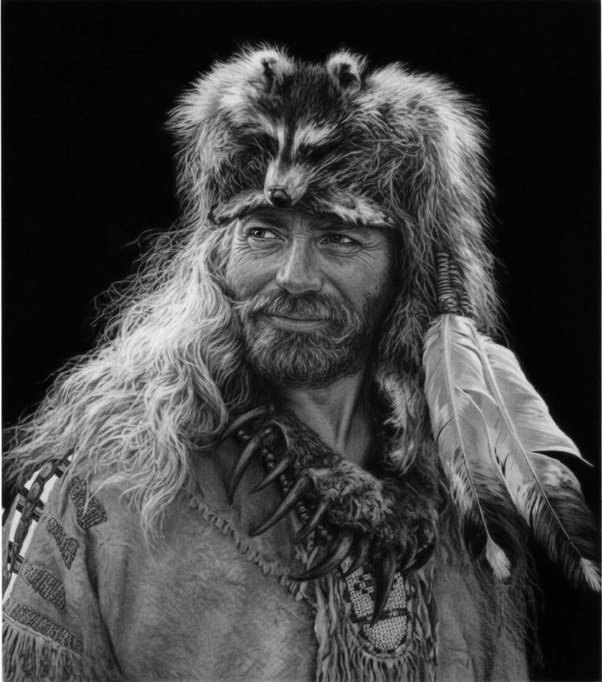
John Colter, born in 1774 and hardened as one of Lewis & Clark’s explorers, faced a death that few could outrun. Captured by Blackfeet warriors, he was given no quick execution. Instead, they mocked him—turned him loose, naked on the prairie, with a head start, and then set out in pursuit. Six miles he ran, thorns tearing his flesh, lungs burning, his body breaking down with each stride. Yet somehow, Colter surged forward, desperation pushing him faster than warriors who hunted for sport.
At the river’s edge, his strength should have failed him—but Colter turned on one pursuer, killed him with his own spear, and vanished into the wilderness. Bleeding, ragged, and barefoot, he slipped into a beaver lodge and lay hidden in the muck as his enemies searched the banks above. That night, when the Blackfeet finally moved on, Colter crawled out alive, every breath a rebellion against the death they had promised him. His escape was not just speed or cunning—it was the kind of raw survival that defied all reason, the same madness of endurance that marked men like Cicero Perry.
Colter lived to wander on, a legend of the frontier. His “run” was retold in whispers, a tale of naked defiance on open ground, proof that the wilderness forged men who refused to die even when every odd was against them. By the time he passed in 1813, his name carried the weight of myth, a symbol of what it meant to gamble with death and win. Colter’s story forces us to ask: when the world strips you of every weapon, every shield, even your clothes—what is left but the will to run until the chase itself breaks?