
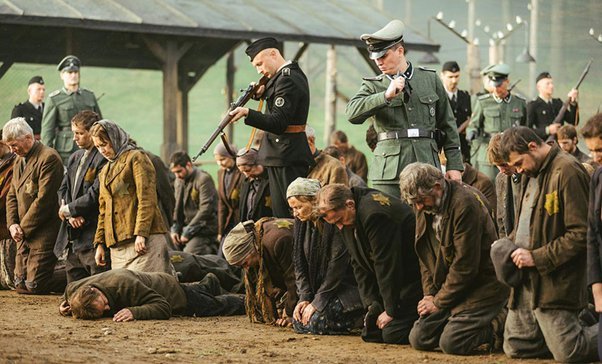
The end of the war is here. World War II is about to come to an end. Allied Forces have broken into Nazi camps to see with their own eyes what has been behind these gates.
There is very little opportunity for any type of immediate revenge. Most of the people inside these camps are barely alive. They are starving, sick and too weak to stretch out their arms to fight back immediately. You will experience lots of anger but first you must survive.
The first thing that happened when Allied forces discovered these camps was shock, horror and disbelief. They were not the only ones shocked by this discovery. In a few instances Allied troops provided guns to survivors so they could defend themselves. Most “revenge” against the Nazis did not occur at that moment in time but was committed later in a court of law such as during the Nuremberg trials where survivors shared their experiences with the courts and Nazi leaders were held accountable.
The resistance began at different times and places even before 1945.
For example at Sobibor in 1943 prisoners deceived guards, attacked them and tried to escape. At Treblinka prisoners rebelled and burned parts of the camp. At Auschwitz there were many actions committed against the system such as sabotage and bombings but these actions were kept secret.
The largest act of revolt was the Warsaw Ghetto Uprising when Jewish fighters produced their own weapons and fought off the Germans much longer than expected.
The point is simply that revenge is not always instantaneous but often a combination of survival, resistance and non-vanishment. For some the desire was for immediate revenge but for others their desire was for survival and resistance through their experiences.