
Two years ago, my girlfriend Freya, a urologist, came home from work visibly shaken. She told me about a patient she had seen that day—a case that was shocking, heartbreaking, and unforgettable.
The patient was an elderly man, around 75 years old. He had come to the hospital complaining of severe pain in his groin and a general feeling of being unwell. At first glance, his symptoms were concerning, but nothing could have prepared Freya for what she discovered during the examination.
What she found was extremely serious.
The man was suffering from Fournier’s gangrene.
Freya told me quietly, almost in disbelief,
“It was the very first time I’ve ever seen this condition at this hospital.”
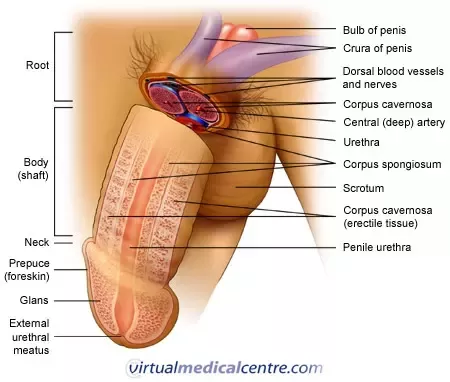
Fournier’s gangrene is a rare but devastating infection. It affects the soft tissues of the genital and perineal area—the penis, scrotum, and the region between the legs. The infection spreads rapidly, cutting off blood supply and causing the tissue to die. Without immediate and aggressive treatment, it is often fatal.
Although the condition is rare, it is also notoriously dangerous. Since around 1950, fewer than 2,000 cases have been documented in medical literature. It can affect men and women, and in rare cases, even children.
In this patient’s case, the disease had already progressed to an advanced and severe stage by the time he arrived at the hospital.
The medical team acted quickly. Surgeons worked urgently to remove as much infected and dead tissue as possible in an attempt to stop the spread. The damage, however, was extensive. The man’s entire penis had to be surgically removed as part of the life-saving effort.
Despite these drastic measures, the infection continued to spread.
Over the next few days, the doctors fought to control the disease, but Fournier’s gangrene moves faster than most treatments. The infection overwhelmed his body, and it became clear that nothing more could be done.
Just days after the diagnosis, Freya faced one of the most difficult moments of her career.
She had to sit with the patient and tell him that he had, at best, only a couple of days left to live.
As she explained his condition and prognosis, her voice broke. She couldn’t hold back her tears. Years of training had prepared her to diagnose and treat disease—but not for moments like this.
What happened next stayed with her forever.
Instead of reacting with fear or anger, the man remained calm. He looked at her, saw her crying, and gently comforted her.
He said:
“Thank you, doctor, for your kindness and your courage. I’m glad this will be over soon.”
A few days later, he passed away.
The infection had won—but not without leaving behind a powerful reminder of human dignity, compassion, and grace, even at the very end of life.